
Check your Snowflake and Databricks bill
We put Teradata, Snowflake, and Databricks through a rigorous, real-world workload comparison, measuring cost per query and query performance to show exactly how each platform holds up under the demands of modern data and AI. Before your next Snowflake invoice arrives, see how Teradata helps you do more with faster queries, smarter analytics, and production-ready AI, without paying more for it.
| Teradata | Snowflake | Databricks | |
|---|---|---|---|
| Cost per query |
$0.0009
Teradata
|
$0.0686
Snowflake
|
$0.0108
Databricks
|
| Queries processed |
197,366
Teradata
|
3,144
Snowflake
|
23,825
Databricks
|
Lowest average per-query cost
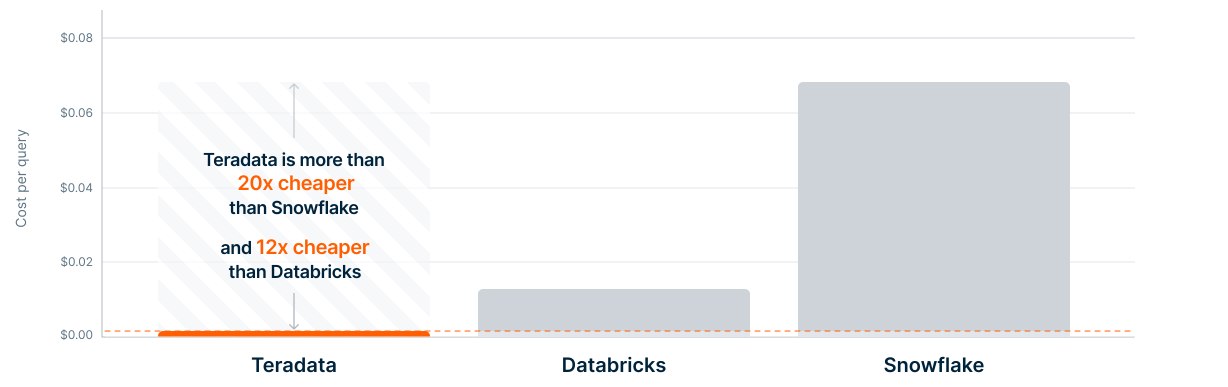
Cost per query comparison across Teradata, Snowflake, and Databricks using a $70 per compute-hour baseline.
The operational cost per query for each platform was analyzed using a base unit of $70 per compute hour. That represented the hourly cost of running each cloud-based platform under the following conditions:
- Generally available software versions
- Mid-tier platform offering
- One-year service pricing commitment
Each system was configured to maximize value within this budget constraint, utilizing the best publicly available knowledge for configuration and setup. The analysis demonstrated a stark contrast:
- Teradata: $0.0009 per query
- Snowflake: $0.0686 per query
- Databricks: $0.0108 per query
Teradata was found to be more than 20x cheaper than Snowflake and 12x cheaper than Databricks.
Highest query performance throughput
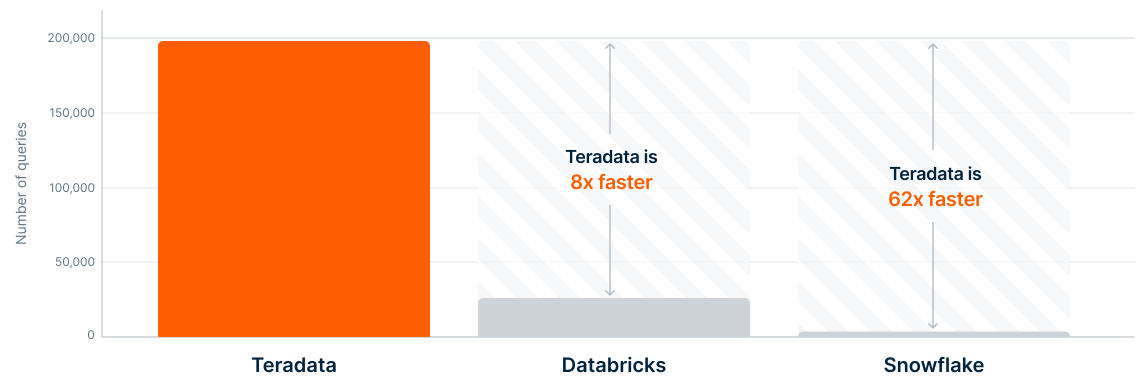
Query throughput comparison across Teradata, Snowflake, and Databricks using 50 queries representing mixed analytical workloads.
The analysis included 50 queries spanning multiple query types to simulate a modern, data-driven workload. We tested them over a two-hour period designed to gauge each platform's ability to handle complex analytical queries, operational reporting, and tactical queries that reflect the demands of data-driven organizations.
The analysis showed a massive difference between platforms:
- Teradata: 197,366 queries
- Snowflake: 3,144 queries
- Databricks: 23,825 queries
That means Teradata was able to handle 62 times more queries than Snowflake and 8 times more queries than Databricks in the same amount of time, under similar circumstances.
Claims above are based on real-world mixed analytical workloads on competitive systems of comparable configurations. For more information on the Teradata competitive workload comparison methodology and process, contact John.Myers@Teradata.com.
Learn more
Related resources


How to get started
Get started with your migration to Teradata today
Fill out the form to engage with Teradata specialists to discuss your specific requirements and objectives and develop a customized migration plan tailored to your needs.