
Streamlining the complexities of banking
- 2M customers
- 630 global branches
- $57B total assets
It is commonplace for retail banks and financial institutions to see frequent and ongoing mergers, acquisitions, and divestitures. Chances are the retail bank you entrust is a composite or divestiture of multiple financial institutions through the years.
ABANCA is a flagship retail and commercial banking group in the Northwest of Spain. It has spent years merging, acquiring, and divesting. The bank has presence in Spain, Portugal, Germany, Switzerland, France, the UK, Brazil, Venezuela, Panama, Mexico, and the USA.
With over 2M personal and commercial customers, globally, ABANCA’s strategic initiatives include transforming the organization to be more flexible, simplified, and cooperative. They are doing so by boosting innovation through strengthening its banking analytics with the goal of improving customer experience via client knowledge.

As an expanding global banking group, every merger, acquisition, and divestiture requires governance, rules, and policies to be set. ABANCA operationalizes insights using Teradata Vantage™, creating a single version of data truth by incorporating information from its multinational bank acquisitions to extend data analytics across all organizations. The goal? Global data truth is improving client knowledge among ABANCA's employees; ensuring acquisitions, mergers, and divestitures follow a consistent process, ultimately leading to improved customer experience.
A data model help developers and analysts better understand a set of data elements and the corresponding business rules. Every model has a defined scope. Likewise, a data model can represent a specific functional area such as risk management or treasury, or the entire organization. ABANCA invested in the Teradata Financial Services Data Model (FSDM) from the beginning. From this, ABANCA was able to quickly prove value throughout its enterprise by understanding data and its relationships.
Realizing different users require different data access, needs, and tools, ABANCA developed an agile data platform, organizing data into logical layers from business users, to analytical users, to advanced users, to data scientists.

ABANCA’s use of banking analytics has seen their customer satisfaction Net Promoter Score (NPS) increase 300%. A significant improvement not only seen and felt internally, but by their global customers.
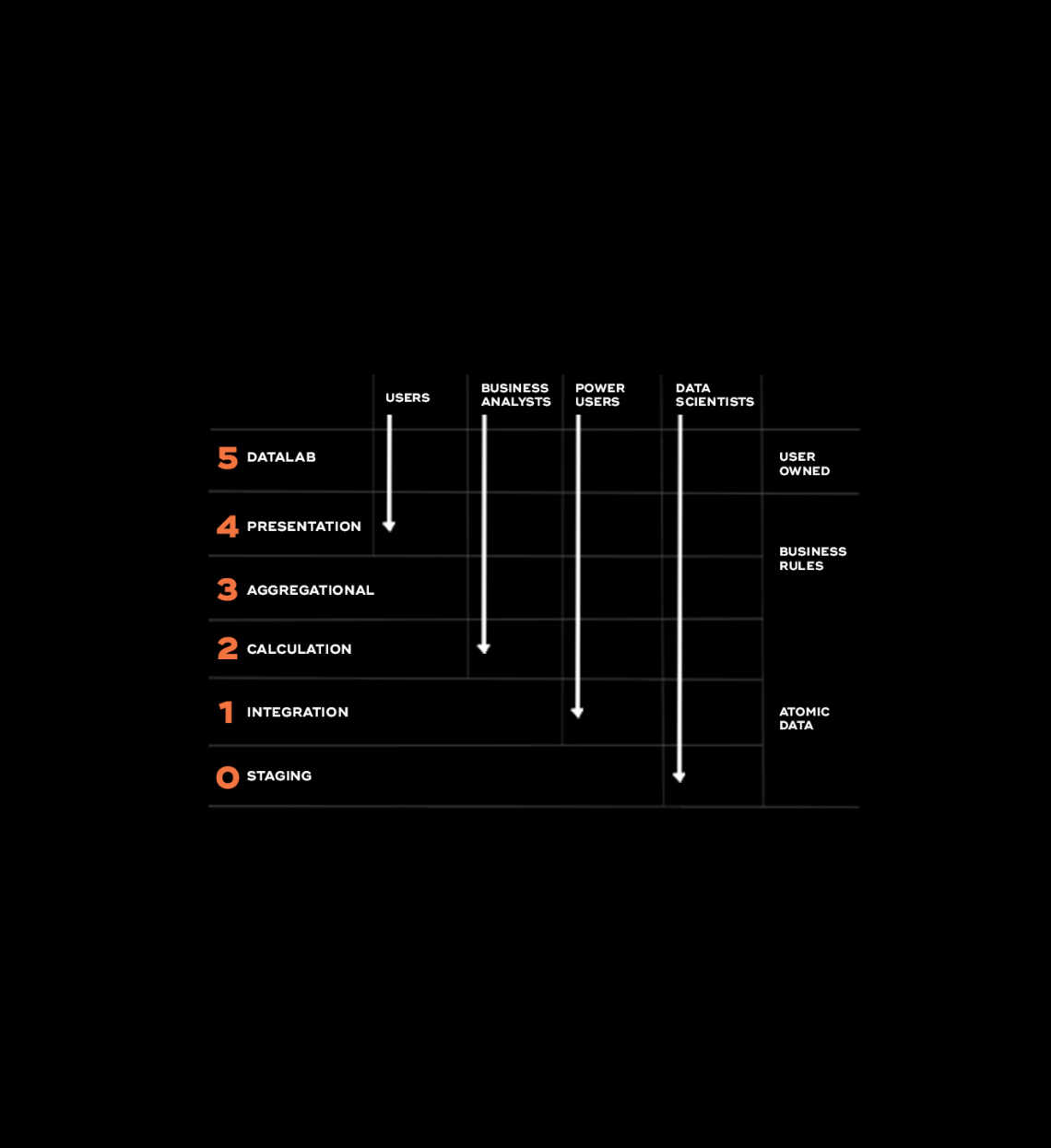
The users become the community that is guided by the layered data architecture – which defines the users’ access based on their roles. Within the ABANCA ecosystem, the layers of the data architecture (data lab, presentation layer, aggregation, calculation, and staging) is designed to give the users appropriate access to the data they need to do their job. ABANCA has defined processes that, along with their data model, ensure they don’t duplicate data elements, but rather reuse data elements that they have already defined and captured.
ABANCA's multinational presence is supported through mergers, acquisitions, and divestitures of its business. Teradata Vantage provides an analytics platform for ABANCA to create a single source of data truth. This operationalizes insights across users and geographies, ensuring operational readiness for business continuity, positioning ABANCA for sustained, long-term growth.
Find out how Teradata helps you accelerate business outcomes and provide the business agility you need.
Our sales representatives are here to help.